

Galveston beach flags, explained
Six colors, one rule: the flag on the sand wins. Here’s what each one means before you wade in.
Beach Patrol’s flag system
The Galveston beach flag system: what each color means
Last posted flag: Green flag · posted Nov 10, 2026 · 7:56 AM CT. Older report — current conditions are unconfirmed. Check Beach Patrol before entering the water.Galveston beach conditions today →
Green flagLast posted
Calm — but swim with care
The quietest day the Gulf offers. It still isn’t a pool: currents and drop-offs don’t take green days off.
Yellow flag
Use caution entering the water
Flown for normal Gulf conditions to keep swimmers alert. Beach Patrol’s advice on yellow days: stay close to shore.
Red flag
Rough water — strong wind, current, or large surf
Adults should stay no deeper than their waist; non-swimmers and kids should enjoy the water along the surf line. Assume very strong rip currents near any groin or jetty.
Double red flag
Water closed to the public
Part of Beach Patrol’s live status system for extremely dangerous conditions. When it’s up, stay out of the water.
Purple flag
Marine life in the water
Jellyfish, Portuguese man-o-war, stingrays, or other stingers. Purple flies alongside another flag — shuffle your feet to warn off rays.
Orange flag
Air or water-quality warning
An environmental warning for air and/or water quality. Ask the lifeguard for details.
Where to look
Where the flags fly
Beach Patrol posts warning flags and signs every day along Seawall Boulevard at:
- 61st St
- 53rd St
- 37th St
- 29th St
- 10th St
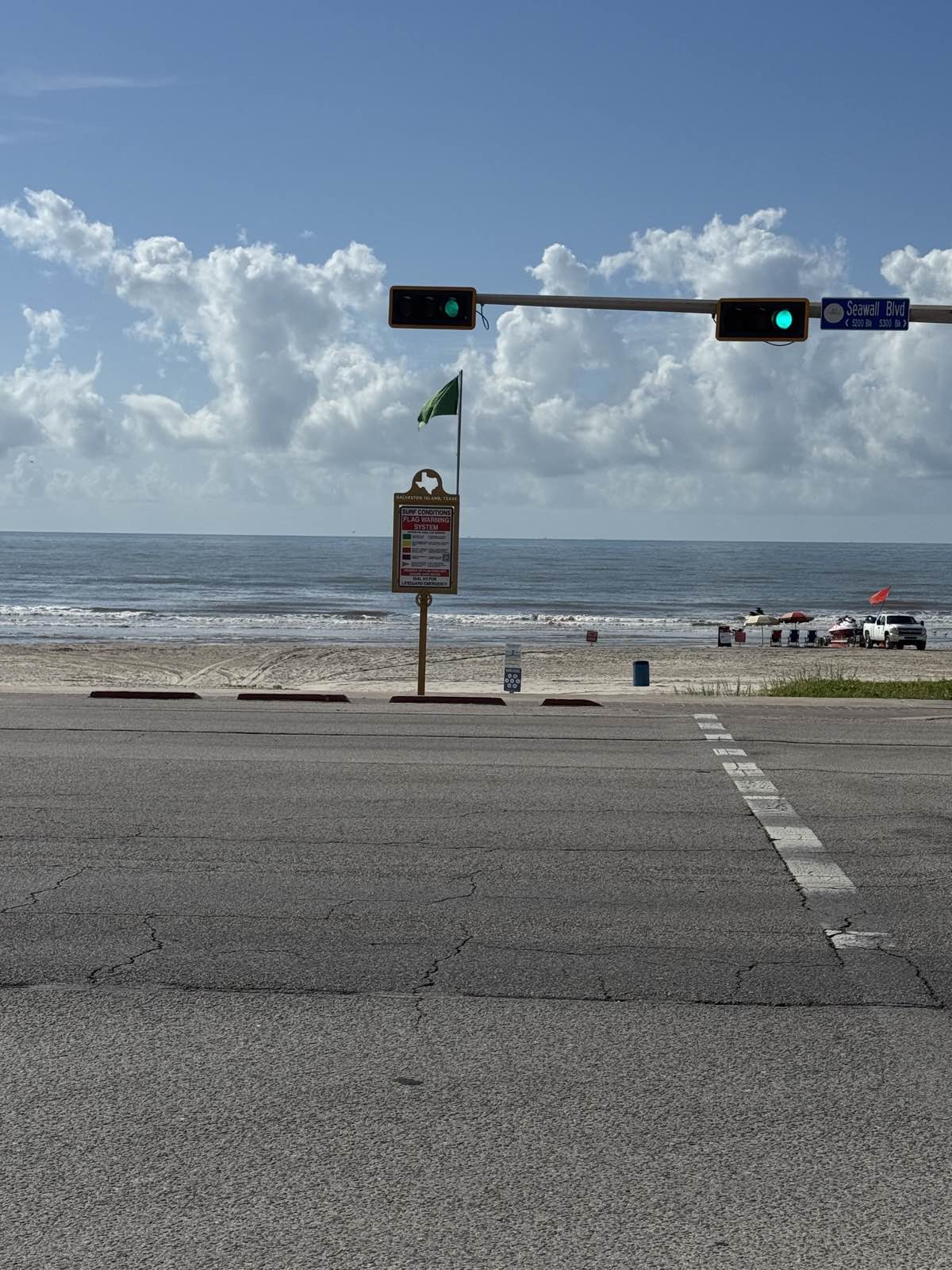
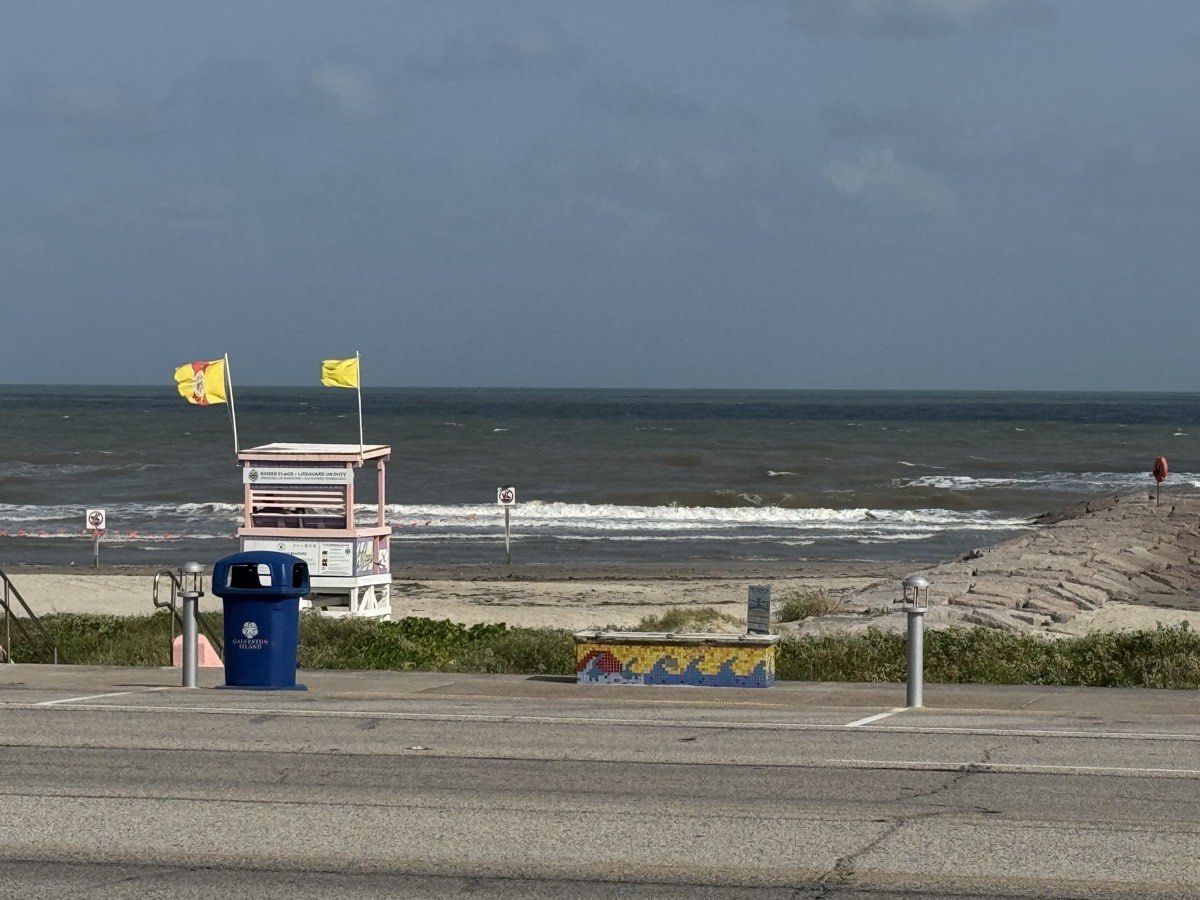
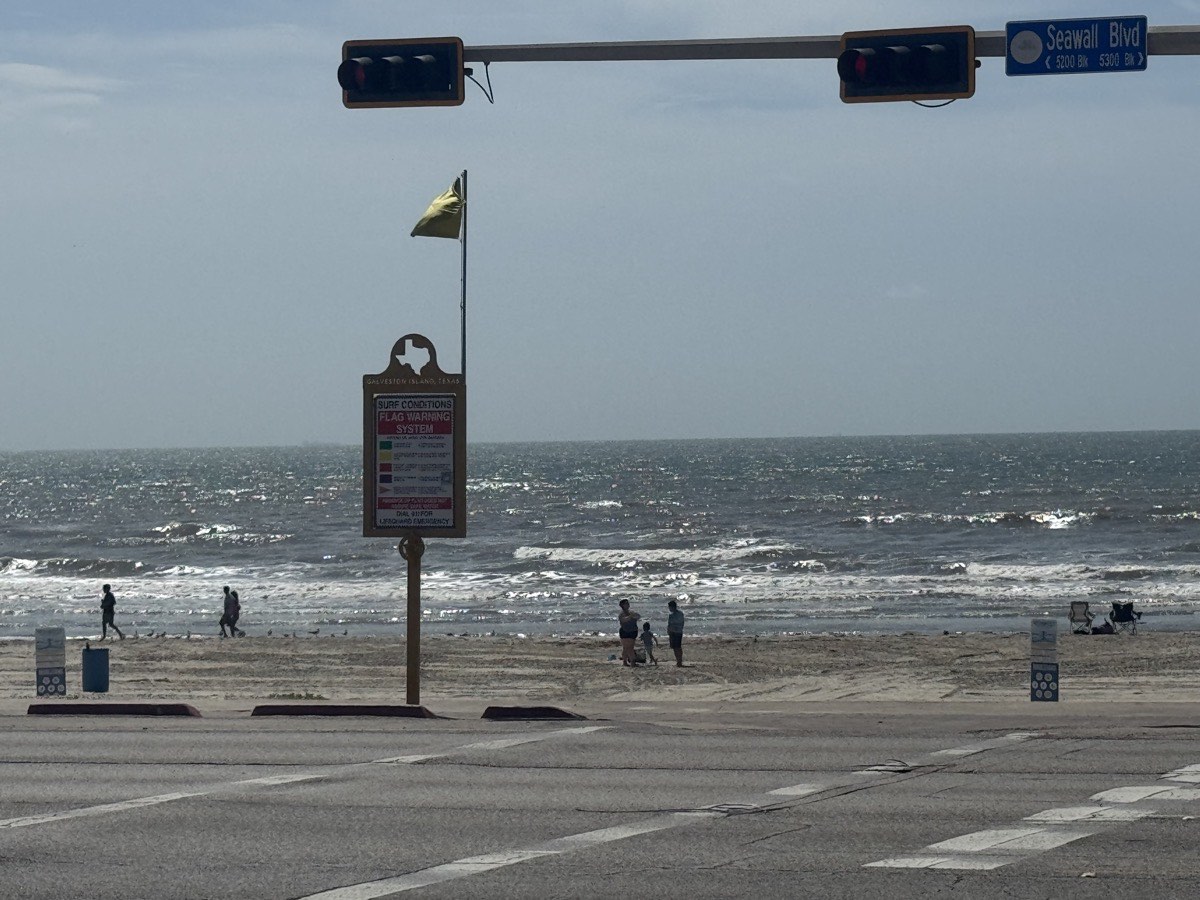
In summer, every guarded lifeguard tower flies the day’s flags too, and Park Board parks — East Beach, Stewart Beach, and the West End pocket parks — fly them whenever they’re open. Not near a tower? Walk to the closest one and read it before you get in.
The rocks are the risk. On a red flag day, assume very strong rip currents beside any groin or jetty. Swim the middle of the sand, well away from the rocks.
Before you go
Checking today’s flag
Our Galveston beach conditions page shows the flag straight from Beach Patrol’s live status feed, next to the wind, water, and tides. You can also check Beach Patrol’s status monitor ↗, or sign up with Beach Patrol for the day’s flags by email or text.
Whatever a screen says, the flag flying on the sand and the lifeguard under it have the final word.
Heading out once you’ve read it? Sort out where to park at each beach first — and if one good flag day turns into a weekend, compare Galveston hotels.
The five beaches
Pick your beach
Five beaches, five different days. Each guide says who it is for, how to get there, and where to park.
- Stewart BeachFamily beach with full facilitiesGuide and directions →
- East BeachBiggest beach; festivals, drinking OKGuide and directions →
- Seawall free beachesFree access, waves then lunchGuide and directions →
- Babe's BeachQuieter, more towel roomGuide and directions →
- Galveston Island State ParkNature end — trails, birding, paddlingGuide and directions →
Beach guides
Plan the rest of your beach day
Live beach conditions
The beach-day verdict, best stretch, tides, and Beach Patrol’s flag.Check conditions now →By monthGulf water temperature
Today’s reading plus month-by-month averages and a swim-or-skip verdict.See every month, judged →Red tideRed tide in Galveston
What a bloom means for swimming, breathing, and your plans.Read the red-tide guide →ParkingWhere to park at each beach
The Seawall, the two beach parks, and the State Park each charge a different way — and where it’s free.See parking, beach by beach →StayGalveston hotels
Beachfront resorts, downtown, and the closest beds to the cruise port — verified facts, book direct.Compare Galveston hotels →Quick answers
Beach flags FAQ
What does each Galveston beach flag mean?
Green: low hazard, swim near a lifeguard. Yellow: medium hazard — moderate surf or currents, stay close to shore. Red: high hazard, strong surf or currents; weak swimmers stay out. Double red: the water is closed to the public. Purple: dangerous marine life (jellyfish, Portuguese man o’ war) — flown with one of the colors above. The flag on the sand always wins over any forecast.
What do the beach flag colors mean in Galveston?
Green means calm but swim with care; yellow means use caution and stay close to shore; red means rough water from strong wind, current, or surf; purple means jellyfish, man-o-war, stingrays, or other marine life; orange is an air or water-quality warning. Beach Patrol’s live status system also uses double red when the water is closed.
Can you swim in Galveston on a red flag day?
Galveston Island Beach Patrol’s guidance on red flag days: adults stay no deeper than their waist, and non-swimmers and children stay along the surf line. Assume very strong rip currents near groins and jetties.
What does a purple flag mean on Galveston beaches?
Potential problems with marine life — jellyfish, Portuguese man-o-war, stingrays, or other stingers. Purple flags are flown together with another flag, so read both.
Where are the beach flags posted in Galveston?
Beach Patrol posts warning flags and signs each day along Seawall Boulevard at 61st, 53rd, 37th, 29th, and 10th Streets. In summer every guarded lifeguard tower flies the day’s flags, and Park Board parks (including East Beach, Stewart Beach, and the West End pocket parks) fly them when open.
How do I check today’s beach flag in Galveston?
Our beach conditions page shows the flag straight from Beach Patrol’s live status feed. Beach Patrol also sends the day’s flags by email or text if you sign up — and the flag flying on the sand always has the final word.