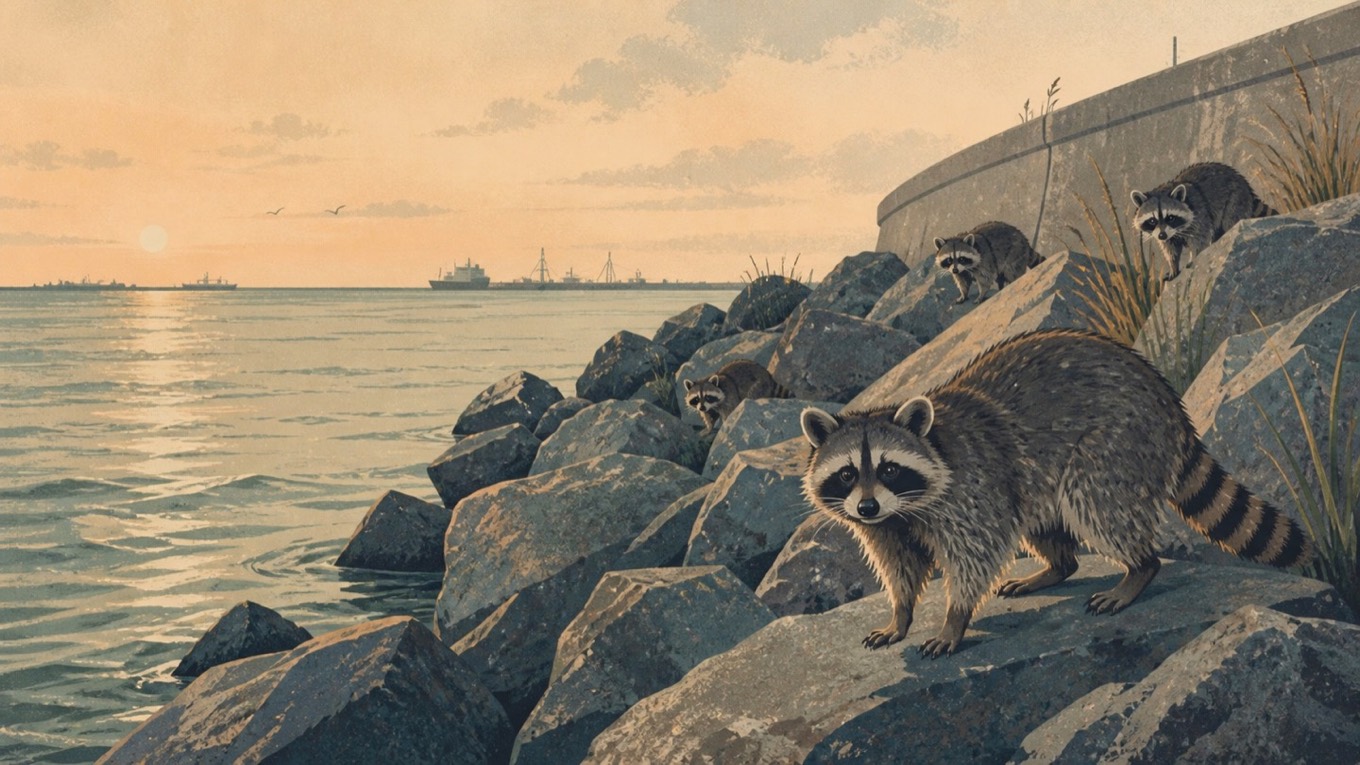
Galveston’s most unlikely local celebrities wear masks, work nights, and live among the granite rocks at the island’s far eastern edge. People call them a herd. The more accurate word is a colony—and the important word is wild.
The East End raccoons became social-media regulars after visitors began sharing videos of them climbing through the seawall rocks and gathering for handouts. The scene looks charming from a phone screen. In person, it is a group of powerful, dexterous wild animals that have learned people sometimes arrive carrying dinner.
Here is the blunt rule: enjoy the sighting if one happens. Do not turn it into a feeding stop.
What happened to the colony
In July 2025, Galveston animal-services officers trapped and removed seven raccoons—four adults and three juveniles—from the eastern seawall area. The operation set off a large local argument online, including rumors that the animals had been killed or removed after a child was bitten.
The city’s spokesman told a Gulf Coast reporter that neither rumor was true. The seven animals went to a wildlife rehabilitation facility near Santa Fe, and the city had no official bite report connected to the colony. At the time of that report, officials said many raccoons remained and no further removal was planned.
That is a dated update, not a promise about what you will find today. Wildlife moves. City responses change. A raccoon sighting is never a scheduled attraction.
The handout is the problem
The colony did not need help discovering food. Raccoons can forage, climb, swim, open containers, and adapt to developed areas with impressive efficiency. What human food changes is their relationship with people.
Animals accustomed to being fed can lose their natural fear of humans and move closer to homes and food sources. The shorter version: do not feed raccoons. Feeding can concentrate animals, spread disease, and create the human-animal conflicts that eventually get wildlife removed.
French fries and cheese puffs are not kindness. They teach a wild animal that the next person, child, picnic bag, or parked car may contain food. Even an animal that looks calm can bite or scratch when a handout does not arrive quickly enough.
It also changes when the animals appear. Raccoons are naturally most active at night, when their hearing, climbing ability, and sensitive paws give them an advantage. A daytime crowd waiting beside the rocks with snacks is not witnessing untouched island behavior; it is watching wildlife reorganize its day around an artificial food source. That distinction matters if the goal is to keep seeing healthy raccoons here years from now.
If you see them, do this
Stay back. Use the zoom on your camera instead of your feet. Keep children beside you and dogs leashed. Do not hold out food for a closer photo, and do not leave food on the rocks after you go.
If a raccoon approaches, give it space and move away without cornering it. An animal that is stumbling, unusually aggressive, badly injured, or unable to retreat is not a photo opportunity. Leave healthy wildlife alone and contact animal services when there is a genuine concern.
The same rule applies everywhere else on the island: secure trash, do not leave pet food outside, and never reach into the rocks after something you dropped. Those gaps are habitat, not storage cubbies.
Is it worth making a special trip?
No. The far East End is worth your time for the working harbor, ship traffic, birds, wind, and the strange feeling of standing where the island runs out. The raccoons should be a possible sighting, not the reason you go.
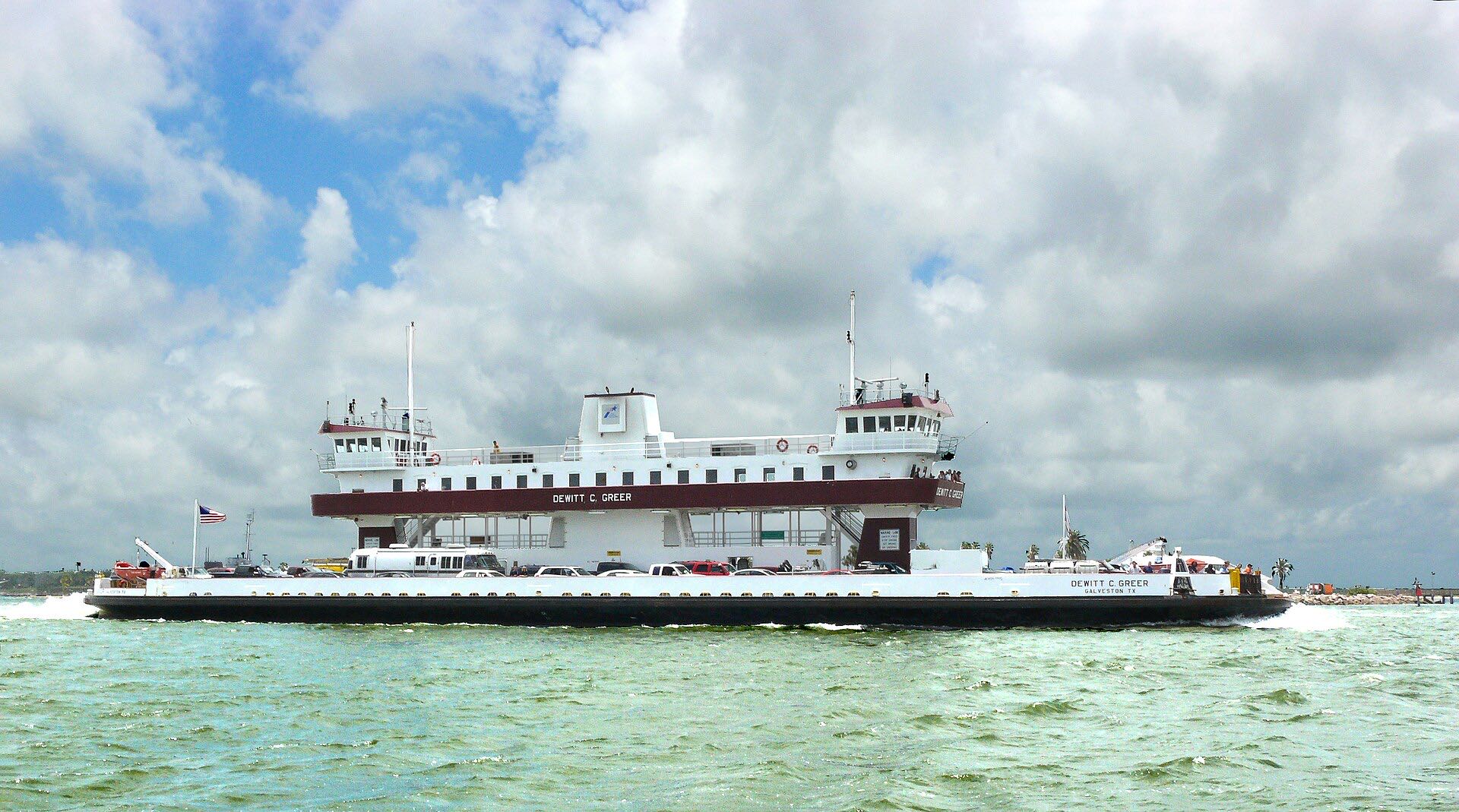
For a better wildlife-first outing, take the free ferry dolphin run or use the broader things-to-do guide. If you are already headed toward the sand, check today’s beach conditions and compare the Seawall, Stewart Beach, and East Beach before choosing your stretch.
The local verdict
The raccoons are not mascots, pets, or performers. They are a vivid piece of urban island wildlife surviving beside a working port and a busy tourist beach.
Look if you are lucky enough to see them. Take the photo. Keep the snack in your bag. The best way to keep Galveston’s wild raccoons wild is to leave without changing what they do next.