Galveston’s ghost wolves are not a hidden pack of endangered wolves. They are coyotes carrying something much rarer than their familiar shape suggests: genetic ancestry from red wolves that once lived along the Gulf Coast.
That distinction is the whole story. The island animals are not legally classified as red wolves, and calling them an endangered local wolf population skips past the science. Their DNA may still preserve genetic variation from one of North America’s most endangered canids.
Why people call them ghost wolves
The name emerged after residents noticed that some Galveston coyotes looked different—larger bodies, broader features, and reddish coats among them. Samples collected from island animals led researchers to confirm substantial red-wolf ancestry.
Red wolves interbred with Gulf Coast coyotes before disappearing from the region. Some of that ancestry persisted in later generations. The “ghost” is genetic: traces of a vanished local population surviving in animals still moving through the dunes.
Federal researchers continue to manage red-wolf recovery and study Gulf Coast canids, while cautioning that ancestry alone does not make these coyotes red wolves.
Why the DNA matters
Today’s red-wolf population descends from a very small number of founders. That makes genetic diversity a serious recovery problem. Galveston’s coyotes may carry red-wolf variants that are missing from the managed population.
Researchers are studying whether those variants could eventually inform red-wolf conservation. That is a scientific possibility, not a promise that island coyotes will be relabeled or moved into a breeding program.
What is already clear is that the population gives researchers a living record of how wolves and coyotes mixed as the red wolf disappeared from Texas.
The road is an immediate threat
Cars are less abstract than genetics. Ghost wolves cross island roads to move between feeding areas, cover, and family territories. Vehicle strikes have killed increasing numbers of the animals.
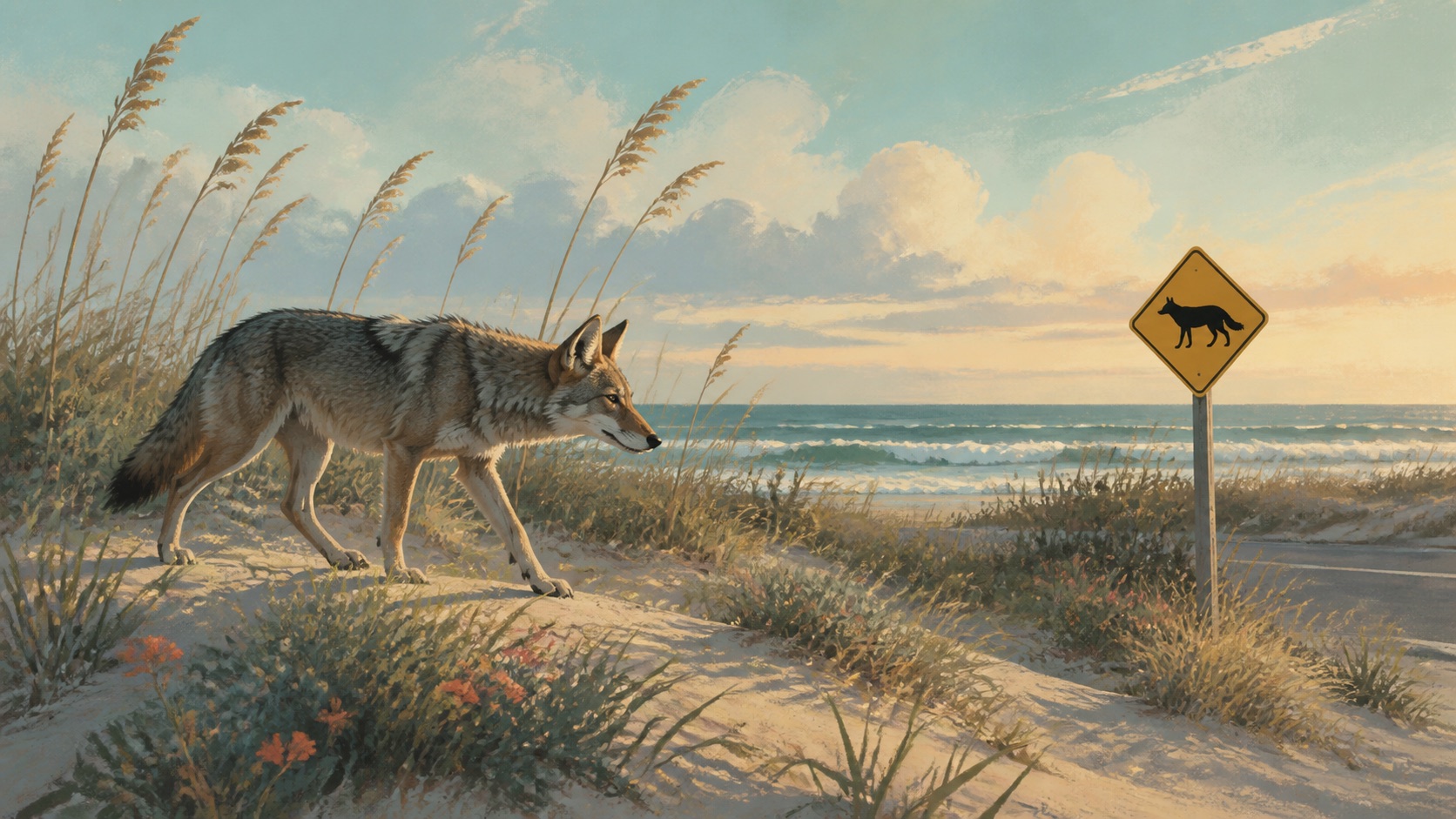
Wildlife-crossing signs along FM 3005 on the West End warn drivers where crossings are common. The signs do not turn the road into protected habitat. They ask for the useful intervention available every day: notice the landscape and slow down.
Development adds another pressure. The Gulf Coast Canine Project has raised concerns about major projects near habitat used by the East Beach pack. The argument is not that the island must stop changing. It is that connected dunes and undeveloped corridors are what allow wildlife to move without being forced onto roads or into neighborhoods.
If you see one
Do not follow it for a better photograph. Do not feed it. Keep dogs leashed and give the animal a clear way to leave.
Coyotes generally want distance from people. Feeding, crowding, and letting pets chase them erode that distance and create the conflicts that end badly for wildlife. A ghost wolf is not a roadside attraction with an appearance time.
If one crosses ahead of you, the right response is simple: slow down, stay in the car, and let it clear the road. If you encounter one on foot, make room rather than closing it.
The local verdict
The remarkable part is not that Galveston secretly has wolves. It is that ordinary-looking island coyotes carry a biological record almost lost from the Gulf Coast.
You do not need to see one to appreciate that story. Drive the West End like wildlife may cross, leave dune corridors alone, and treat any sighting as a moment—not a pursuit.